
AI powered blockchain framework for predictive temperature control in smart homes using wireless sensor networks and time shifted analysis
The rapid advancement of smart home technologies has highlighted the need for systems that not only provide comfort but also optimize energy usage and ensure data security. Traditional thermostat systems are limited in their ability to predict and adapt to varying environmental conditions and user behaviors, often resulting in inefficient heating schedules and increased energy consumption. Additionally, the centralized handling of sensitive data in these systems raises concerns about privacy and vulnerability to unauthorized access. To address these challenges, there is a pressing need for an integrated framework that combines predictive analytics, secure data management, and efficient processing capabilities. Specifically, the problem centers on developing a system that can accurately detect heating and cooling events, reliably trigger scheduled heat-on events, reduce energy consumption through predictive adjustments, and maintain data integrity and security within the smart home environment. This necessitates leveraging advanced technologies such as AI-powered machine learning algorithms, blockchain for secure and transparent data handling, wireless sensor networks for real-time environmental monitoring, and time-shifted analysis to optimize computational efficiency.
In this section, we define the mathematical framework and relationships necessary to develop an AI-powered blockchain framework for predictive temperature control in smart homes. The system aims to optimize temperature regulation while ensuring secure data handling and improving energy efficiency. The key components of the system include ML algorithms for prediction, blockchain for secure data management, WSNs for real-time monitoring, and time-shifted analysis for optimized computational efficiency.
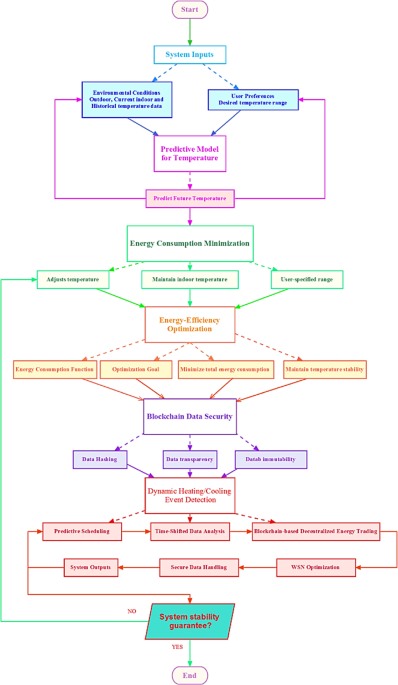
Figure 1 illustrates the flowchart for solving the problem, outlining the step-by-step process and the sequence of operations involved. It provides a clear visual representation of the method used to address the issue.

Flowchart depicting the problem-solving process.
The AI-Powered Blockchain Framework for Predictive Temperature Control in Smart Homes can be modeled as a holistic system integrating predictive control, energy optimization, and blockchain technology. The architecture can be represented as follows:
The system takes the following inputs:
$$\:\textV\left(t\right)\right=\left\{V\left(t\right)\right_V\left(t\right)\right\left(t\right),{T}_{\text{current\:}}\left(t\right),{H}_{\text{historical\:}}\left(t\right),{U}_{\text{user\:}}\right\}$$
(1)
where \(\:{U}_{\text{user\:}}\) represents user-defined preferences, such as the desired temperature range. The predictive model forecasts future temperature:
$$\:{T}_{\text{pred\:}}\left(t\right)=g\left({T}_{\text{current\:}}\left(t\right),{T}_{\text{outdoor\:}}\left(t\right),{H}_{\text{historical\:}}\left(t\right)\right)$$
(2)
with the control law ensuring:
$$\:{T}_{\text{desired\:}}-\delta\:\le\:{T}_{\text{actual\:}}\left(t\right)\le\:{T}_{\text{desired\:}}+\delta\:$$
(3)
The optimization function minimizes energy consumption:
$$\:\text{m}\text{i}\text{n}{E}_{\text{total\:}}={\int\:}_{{t}_{1}}^{{t}_{2}}\:{P}_{\text{heating\:}/\text{\:cooling\:}}\left(t\right)dt$$
(4)
subject to constraints on temperature stability. Sensor data and control signals are securely stored in a blockchain:
$$\:H\left({\text{T}\text{x}}_{i}\right)=\text{H}\text{a}\text{s}\text{h}\left({T}_{\text{sensor\:}},{P}_{\text{energy\:}},t\right)$$
(5)
ensuring immutability and transparency in the data. The system detects heating and cooling events dynamically:
$$\:{E}_{\text{event\:}}\left(t\right)=\frac{d{T}_{\text{actual\:}}\left(t\right)}{dt}$$
(6)
and uses historical patterns for scheduling:
$$\:S\left(t\right)=\text{a}\text{r}\text{g}\text{m}\text{i}\text{n}{D}_{\text{shifted\:}}\left(t\right)$$
(7)
The outputs are:
$$\:\text{\:Outputs\:}=\left\{{T}_{\text{actual\:}}\left(t\right),{P}_{\text{Optimized\:}}\text{},{E}_{\text{events\:}},\text{\:Blockchain\:State\:}\right\}$$
(8)
where \(\:{P}_{\text{Optimized\:}}\) represents optimized power usage and \(\:{E}_{\text{events\:}}\) identifies critical heating/cooling events.
This integrated system provides a robust, secure, and energy-efficient solution for temperature control in smart homes, demonstrating the novelty and practical relevance of the proposed framework.
Predictive temperature control
Let \(\:T\left(t\right)\) represent the indoor temperature at time \(\:t\), measured by the wireless sensors. The goal is to predict the future temperature \(\:T(t+{\Delta\:}t)\) based on historical temperature data, user preferences, and environmental conditions.
To model the temperature dynamics, we can use a simple heat transfer equation:
$$\:\frac{dT}{dt}=\frac{1}{C}\left(P\left(t\right)-U\left(T\left(t\right)-{T}_{ext}\left(t\right)\right)\right)$$
(9)
\(\:C\) is the thermal capacity of the room,\(\:\:P\left(t\right)\) is the power supplied by the heating system at time \(\:{t}_{r}\),\(\:\:U\) is the overall heat transfer coefficient of the building and\(\:\:{T}_{ext}\left(t\right)\) is the external temperature.
The ML model uses historical temperature data \(\:\left\{T\left({t}_{1}\right),T\left({t}_{2}\right),\dots\:,T\left({t}_{n}\right)\right\}\) and corresponding energy consumption \(\:P\left(t\right)\) to predict future temperature changes. The prediction function can be expressed as:
$$\:T(t+{\Delta\:}t)=f\left(T\left(t\right),P\left(t\right),{T}_{ext}\left(t\right)\right)$$
(10)
where \(\:f\) is the learned function based on past data using a machine learning algorithm, such as Recurrent Neural Networks (RNNs) or Long Short-Term Memory (LSTM) models.
Energy consumption optimization
The objective is to minimize the energy consumption \(\:E\), while maintaining user comfort, represented by a set temperature range \(\:\left[{T}_{\text{min\:}},{T}_{\text{max\:}}\right]\).
The energy consumed by the heating system over a period \(\:T\) is:
$$\:E={\int\:}_{0}^{T}P\left(t\right)dt$$
(11)
where \(\:P\left(t\right)\) is the power required to maintain the temperature within the desired range. Using predictive temperature control, the heating system can adjust the power supply based on the forecasted temperature \(\:T(t+\varDelta\:t)\), thereby reducing unnecessary energy use.
The system seeks to minimize \(\:E\) under the constraint:
$$\:{T}_{min}\le\:T\left(t\right)\le\:{T}_{max}$$
(12)
Time-Shifted analysis
To reduce peak-time computational load, the system leverages time-shifted analysis, where non-urgent computations, such as data processing or historical analysis, are performed during off-peak times.
Let \(\:{C}_{\text{p}\text{e}\text{a}\text{k}}\) be the computational load during peak hours, and \(\:{C}_{\text{o}\text{f}\text{f}}\) be the load during off-peak hours. Time-shifted analysis aims to minimize \(\:{C}_{\text{p}\text{e}\text{a}\text{k}}\) by shifting part of the workload to off-peak times. The relationship can be modeled as:
$$\:{C}_{\text{t}\text{o}\text{t}\text{a}\text{l}}={C}_{\text{p}\text{e}\text{a}\text{k}}+{C}_{\text{o}\text{f}\text{f}}$$
(13)
with the goal to reduce \(\:{C}_{\text{p}\text{e}\text{a}\text{k}}\), where:
$$\:{C}_{\text{p}\text{e}\text{a}\text{k}}={C}_{\text{t}\text{o}\text{t}\text{a}\text{l}}-\varDelta\:{C}_{\text{s}\text{h}\text{i}\text{f}\text{t}}$$
(14)
and \(\:\varDelta\:{C}_{\text{s}\text{h}\text{i}\text{f}\text{t}}\) represents the load shifted to off-peak times. This reduces overall peak-time load by a percentage \(\:\varDelta\:{C}_{\text{s}\text{h}\text{i}\text{f}\text{t}}/{C}_{\text{t}\text{o}\text{t}\text{a}\text{l}}\).
Blockchain for secure data handling
For data security, blockchain technology is integrated to ensure tamper-proof and transparent data management. Each temperature reading and energy consumption record is stored as a block in the blockchain. Let \(\:D\left(t\right)\) represent the data at time \(\:t\) (e.g., temperature readings, energy consumption). The blockchain ensures that \(\:D\left(t\right)\) cannot be altered once recorded.
The data is secured using a cryptographic hash function \(\:H\), where:
$$\:H\left(D\left(t\right)\right)=hash\left(D\left(t\right)\right)$$
(15)
Each new block includes the hash of the previous block \(\:H\left(D\right(t-1\left)\right)\), ensuring data immutability:
$$\:B\left(t\right)=\left\{\right(D\left(t\right),\:H\left(D\right(t-1\left)\right)\}\:$$
(16)
This chain of blocks guarantees that any attempt to tamper with historical data will be easily detected, as it would alter the hash values in subsequent blocks.
System optimization and customer satisfaction
The final objective is to optimize the system for both energy efficiency and user satisfaction. Let SSS represent customer satisfaction, which depends on maintaining the desired temperature range and minimizing energy costs. The overall optimization problem can be formulated as a multi-objective problem:
$$\:\text{\:minimize\:}\:E,\:\text{m}\text{a}\text{x}\text{i}\text{m}\text{i}\text{z}\text{e}\:S$$
(17)
subject to the constraints \(\:{T}_{min}\le\:T\left(t\right)\le\:{T}_{max}\) and secure data handling through blockchain. The system seeks to balance energy efficiency with user comfort and data security.
Dynamic event detection for heating and cooling
The system must dynamically detect heating events (e.g., radiator turning on) and cooling events (e.g., radiator turning off). These events can be modeled as binary occurrences based on the rate of temperature change over time.
Let \(\:\varDelta\:T=T(t+1)-T\left(t\right)\) represent the change in temperature between time intervals. Define \(\:H\left(t\right)\) as a heating event and \(\:C\left(t\right)\) as a cooling event, which are triggered when certain thresholds are crossed:
-
\(\:H\left(t\right)=1\) if \(\:{\Delta\:}T>{\Delta\:}{T}_{\text{heat-on,\:}}\) where \(\:{\Delta\:}{T}_{\text{heat-on\:}}\) is the minimum temperature change to trigger a heating event.
-
\(\:C\left(t\right)=1\) if \(\:{\Delta\:}T<{\Delta\:}{T}_{\text{cool-off\:}}\), where \(\:{\Delta\:}{T}_{\text{cool-off\:}}\) is the maximum temperature drop to trigger a cooling event.
The framework can further be refined by employing machine learning models that dynamically learn from data to refine these thresholds and account for varying environmental conditions:
$$\:H\left(t\right)=1\text{\:if\:}{\Delta\:}T>{f}_{\theta\:}\left(T\left(t\right),{T}_{ext}\left(t\right),P\left(t\right)\right)$$
(18)
where \(\:{f}_{\theta\:}\) is a learned function that dynamically adjusts thresholds based on environmental and system variables.
Predictive scheduling using historical data
To optimize energy usage, the system uses predictive scheduling based on historical data. The goal is to anticipate future temperature changes and schedule heating or cooling events accordingly.
Define \(\:\mathcal{H}\left(t\right)=\left\{H\right(t-\tau\:),\dots\:,H(t\left)\right\}\) as the history of heating events over the time period \(\:\tau\:\), and similarly, \(\:\mathcal{C}\left(t\right)=\left\{C\right(t-\tau\:),\dots\:,C(t\left)\right\}\) as the history of cooling events. The system uses these historical patterns to predict future events:
$$\:P\left(H\right(t+1)=1)={f}_{\mathcal{H},\mathcal{C},\theta\:}\left(T\left(t\right),{T}_{ext}\left(t\right),P\left(t\right)\right)$$
(19)
where \(\:P\left(H\right(t+1)=1)\) is the probability of a heating event occurring at time \(\:t+1\), predicted using a machine learning algorithm trained on historical data \(\:\mathcal{H}\) and \(\:\mathcal{C}\).
The system then schedules heating and cooling events based on the predicted probabilities to minimize energy consumption while maintaining user comfort. If \(\:P\left(H\right(t+1)=1)>{P}_{\text{threshold,\:}}\) the system preemptively triggers a heating event, reducing energy spikes.
Blockchain-Based decentralized energy trading
One of the key innovations is the integration of blockchain for decentralized energy trading. Users within a smart home network can buy or sell surplus energy generated from renewable sources (e.g., solar panels) using blockchain smart contracts.
Let \(\:{E}_{prod}\left(t\right)\) represent the energy produced by a renewable energy source at time \(\:t\), and \(\:{E}_{cons}\left(t\right)\) represent the energy consumed by the smart home at time \(\:t\). The surplus energy is given by:
$$\:{E}_{surplus}\left(t\right)={E}_{prod}\left(t\right)-{E}_{cons}\left(t\right)$$
(20)
where \(\:{E}_{surplus}\left(t\right)>0\) represents excess energy that can be sold, and \(\:{E}_{surplus}\left(t\right)<0\) represents a deficit that can be compensated by purchasing energy.
Using blockchain smart contracts, energy transactions are automated between smart homes. Let \(\:{p}_{buy}\left(t\right)\) and \(\:{p}_{sell}\left(t\right)\) represent the buying and selling prices at time \(\:t\). The smart contract automates the energy trade when:
$$\begin{gathered} {\text{if}}~{E_{{\text{surplus~}}}}\left( t \right)>0,{\text{~sell energy at price}},\;{p_{{\text{sell~}}}}\left( t \right), \hfill \\ {\text{if}}~{E_{{\text{surplus~}}}}\left( t \right)<0,{\text{~buy energy at price}}\;{p_{{\text{buy~}}}}\left( t \right). \hfill \\ \end{gathered}$$
(21)
Each energy trade is recorded on the blockchain, ensuring transparency and immutability. The smart contract logic can be formalized as:
$$\:\text{\:Energy\:trade\:contract\::\:}\left\{\begin{array}{ll}\text{\:If\:}{E}_{\text{surplus\:}}\left(t\right)>0,&\:\text{\:sell\:energy\:}\\\:\text{\:If\:}{E}_{\text{surplus\:}}\left(t\right)<0,&\:\text{\:buy\:energy\:}\end{array}\right.$$
(22)
The blockchain ledger ensures that energy trades are secured and logged without requiring a central authority, maintaining trust among users in the decentralized energy market.
Wireless sensor network optimization
WSNs play a vital role in real-time monitoring of temperature and environmental conditions in smart homes. However, optimizing the energy efficiency and reliability of the WSN itself is essential.
Let \(\:N\left(t\right)\) represent the number of active sensors at time \(\:t\), and \(\:{P}_{s}\left(t\right)\) represent the power consumption of the WSN at time \(\:t\). The goal is to minimize the power consumption of the WSN while maintaining sufficient sensor coverage.
The optimization problem can be formulated as:
$$\:\begin{array}{c}\text{m}\text{i}\text{n}\text{i}\text{m}\text{i}\text{z}\text{e}{P}_{s}\left(t\right)=\sum\:_{i=1}\:\:{P}_{\text{sensor\:}}\left(i\right)\\\:\text{\:subject\:to\:sensor\:coverage\:constraints:\:}{C}_{\text{m}\text{i}\text{n}}\le\:C\left(t\right)\end{array}$$
(23)
where \(\:{P}_{\text{sensor\:}}\left(i\right)\) is the power consumption of the \(\:i\)-th sensor, and \(\:C\left(t\right)\) represents the coverage of the WSN, which must exceed a minimum threshold \(\:{C}_{\text{m}\text{i}\text{n}}\) for reliable temperature monitoring.
To reduce power consumption, time-shifted data analysis and adaptive sensing can be employed, where only a subset of sensors is active during certain periods, depending on predicted events.
The system can dynamically deactivate sensors when they are not required, using the predicted temperature changes \(\:T(t+{\Delta\:}t)\) from the machine learning model. This reduces sensor power consumption:
$$\:N\left(t\right)={f}_{N}\left(T\right(t),P(t),C(t\left)\right)$$
(24)
The interaction between the edge server and IoMT devices involves a collaborative exchange of data and computational tasks, which ensures efficient operation in the system. Each IoMT device independently collects and processes local data, generating model parameters based on its specific environment and tasks. These parameters are periodically transmitted to the edge server for aggregation.
The edge server plays a pivotal role in this framework by acting as a central coordinator. It aggregates the model parameters received from multiple devices using advanced techniques, such as weighted averaging or federated optimization, depending on the importance and quality of the data from each device. This aggregation process ensures that the global model is continually updated while preserving the privacy of individual devices since raw data is never directly shared.
To manage real-time updates, the edge server employs a systematic communication protocol that prioritizes low-latency and secure data transfer. The server can handle asynchronous updates, allowing devices with varying computational and network capabilities to participate effectively. Additionally, the edge server uses error-checking and version.
Optimization of objective functions
To formulate the overall optimization problem, we aim to minimize energy consumption, \(\:E\), and computational load, \(\:{C}_{total}\), while maximizing user satisfaction, \(\:S\), and ensuring secure data handling. This leads to a multi-objective optimization problem:
$$\:\text{m}\text{i}\text{n}\text{i}\text{m}\text{i}\text{z}\text{e}\,\mathcal{L}={\alpha\:}_{1}E+{\alpha\:}_{2}{C}_{\text{total\:}}-{\alpha\:}_{3}S$$
(25)
where \(\:{\alpha\:}_{1},{\alpha\:}_{2}\), and \(\:{\alpha\:}_{3}\) are weights representing the relative importance of energy consumption, computational efficiency, and user satisfaction.
Subject to the constraints:
$$\begin{aligned}&{T}_{\text{m}\text{i}\text{n}}\le\:T\left(t\right)\le\:{T}_{\text{m}\text{a}\text{x}}\\ &{C}_{\text{m}\text{i}\text{n}}\le\:C\left(t\right)\\ &\text{Blockchain}\text{\:security\:and\:immutability.\:}\end{aligned}$$
(26)
Blockchain-based data logs enhance system security by providing an immutable and tamper-proof ledger for recording all system transactions and events. Each data log is cryptographically secured, ensuring that once a block is added to the chain, it cannot be altered without the consensus of the network. This feature prevents unauthorized access and data manipulation. Additionally, the decentralized nature of blockchain eliminates single points of failure, making the system resilient against cyberattacks. By incorporating these secure data logs, the proposed framework ensures the integrity and confidentiality of temperature control data in smart homes, thereby fostering user trust and system reliability.
Advanced energy consumption optimization with constraints
The previous formulation provided a basic energy optimization model. We can enhance this by incorporating dynamic energy pricing and more granular control over energy usage based on real-time conditions.
Let \(\:P\left(t\right)\) represent the dynamic price of energy at time \(\:t\), which varies based on demand and supply in the energy market. The cost of energy consumption, \(\:{C}_{E}\), over a period \(\:T\) can be expressed as:
$$\:{C}_{E}={\int\:}_{0}^{T}\:P\left(t\right)\cdot\:{P}_{\text{cons\:}}\left(t\right)dt$$
(27)
where \(\:{P}_{\text{cons\:}}\left(t\right)\) is the power consumption at time \(\:t\).
The objective is to minimize the energy cost \(\:{C}_{E}\) while maintaining comfort, subject to dynamic pricing. Therefore, the optimization function becomes:
$$\:\text{m}\text{i}\text{n}\text{i}\text{m}\text{i}\text{z}\text{e}{C}_{E}={\int\:}_{0}^{T}\:P\left(t\right)\cdot\:{P}_{\text{cons\:}}\left(t\right)dt$$
(28)
subject to the constraints:
$$\begin{aligned}&{T}_{\text{m}\text{i}\text{n}}\le\:T\left(t\right)\le\:{T}_{\text{m}\text{a}\text{x}}\\ & {E}_{\text{cons\:}}\le\:{E}_{\text{m}\text{a}\text{x}}\end{aligned}$$
(29)
The dynamic pricing \(\:P\left(t\right)\) can be modeled as a function of market conditions and predicted demand:
$$\:P\left(t\right)=\:{f}_{\text{d\:}}\left(D(t\right),S\left(t\right))$$
(30)
where \(\:D\left(t\right)\) is the predicted demand and \(\:S\left(t\right)\) is the available energy supply. Incorporating dynamic pricing incentivizes the system to reduce energy usage during peak periods and shift demand to off-peak times, which leads to cost savings.
Blockchain-Based consensus for secure data handling
Blockchain consensus mechanisms ensure the integrity of data within the system. Given the decentralized nature of smart homes, where each home or node is an independent agent, a consensus algorithm like Proof of Stake (PoS) or Delegated Proof of Stake (DPoS) is appropriate to validate transactions without high energy costs.
Let \(\:D\left(t\right)\) represent a data block (e.g., sensor readings, energy trades), and let \(\:V\left(t\right)\) represent the set of validators in the network at time \(\:t\). Each validator \(\:{\nu\:}_{i}\in\:V\left(t\right)\:\)proposes a block \(\:{B}_{i}\left(t\right)\), where the block contains a cryptographic hash of the previous block and the new data to be added.
The consensus algorithm requires that a majority of validators approve the new block. The total number of validators that approve a block \(\:{B}_{i}\left(t\right)\) is denoted as \(\:{A}_{i}\left(t\right)\). The consensus is reached when:
$$\:{A}_{i}\left(t\right)\ge\:\frac{\left|V\left(t\right)\right|}{2}$$
(31)
where \(\:\left|V\left(t\right)\right|\) is the total number of validators. If the block is approved by the majority, it is added to the blockchain, ensuring data integrity.
Algorithm: Blockchain-Based consensus for smart home temperature control
Step 1: Initialization.
• Define the network nodes N={n1,n2,…,nk}.
• Each node ni maintains a local blockchain ledger Li.
• Initialize consensus threshold T (e.g., 51%).
Step 2: Data Collection.
• Each node collects temperature data Di from its associated WSN.
• The data includes room temperature Tr, radiator temperature Th, and time-stamped events.
Step 3: Block Proposal.
Node ni prepares a candidate block Bi with:
Step 4: Validation.
• Broadcast Bi to all nodes in the network.
• Each node validates Bi by:
Step 5: Consensus Mechanism.
• Nodes perform a voting process.
• Accept or reject Bi based on validation.
• Count the votes V(Bi).
• If V(Bi) ≥ T, Bi is accepted and added to the blockchain.
Step 6: Blockchain Update.
• Update local ledger Li to include the new block.
Step 7: Execution of Control Actions.
• Apply the predictive temperature control actions specified in Bi.
Step 8: Repeat.
• Continue the process for the next data interval.
This algorithm ensures secure and decentralized management of temperature control in smart homes while leveraging blockchain for data integrity and trust.
Decentralized energy trading incentives
To encourage energy trading between smart homes, an incentive mechanism can be introduced based on a reward structure for participants who trade energy efficiently. Each user \(\:{u}_{i}\) has a surplus \(\:{E}_{\text{surplus\:}}\left(t\right)\) or deficit \(\:{E}_{\text{deficit\:}}\left(t\right)\) of energy at time \(\:t\), as discussed earlier. The system assigns rewards \(\:{R}_{i}\left(t\right)\) to users based on their contribution to the energy market.
Let \(\:N\left(t\right)\) be the total number of users in the network. The reward for user \(\:{u}_{i}\) at time \(\:t\) is proportional to the energy they contribute to the system and inversely proportional to the overall demand:
$$\:{R}_{i}\left(t\right)=\frac{{E}_{\text{surplus\:}}\left(t\right)}{\sum\:_{j=1}^{N\left(t\right)}\:\:{E}_{\text{deficit\:}}\left(t\right)}\cdot\:{R}_{\text{total\:}}\left(t\right)$$
(32)
where \(\:{R}_{\text{total\:}}\left(t\right)\) is the total reward available at time \(\:t\), which is determined by the blockchain network. This reward system encourages users to contribute surplus energy to the grid, promoting decentralized energy management.
Time-Shifted load balancing with Priority-Based control
In the proposed system, time-shifted load balancing optimizes computational resources by deferring non-critical computations to off-peak times. This is particularly useful for resource-constrained smart home devices. The framework uses priority-based control to assign priority levels to tasks.
Let \(\:\mathcal{T}\left(t\right)=\left\{{T}_{1}\left(t\right),{T}_{2}\left(t\right),\dots\:,{T}_{n}\left(t\right)\right\}\) represent the set of tasks at time \(\:t\), and let \(\:{P}_{i}\left(t\right)\) be the priority of task \(\:{T}_{i}\left(t\right)\). Tasks with lower priority are deferred to off-peak times, thereby reducing peaktime computational load.
The optimization objective is to minimize the peak computational load \(\:{C}_{peak}\) by shifting lowerpriority tasks. The load is reduced according to the equation:
$$\:{C}_{\text{peak\:}}=\sum\:_{i=1}^{{N}_{\text{high\:}}\left(t\right)}\:C\left({T}_{i}\left(t\right)\right)+\sum\:_{i={N}_{\text{high\:}}\left(t\right)+1}^{N\left(t\right)}\:C\left({T}_{i}\left(t\right)\right)\cdot\:\delta\:\left({T}_{i}\left(t\right)\right)$$
(33)
where \(\:{N}_{\text{high\:}}\left(t\right)\) is the number of high-priority tasks, \(\:C\left({T}_{i}\left(t\right)\right)\) is the computational cost of task \(\:{T}_{i}\left(t\right)\), and \(\:\delta\:\left({T}_{i}\left(t\right)\right)\) is the binary variable indicating whether task \(\:{T}_{i}\left(t\right)\) has been deferred to offpeak times.
In a decentralized smart home network, multi-agent collaboration allows multiple homes to collaborate in managing energy and computational load. Each smart home is treated as an agent \(\:{a}_{i}\), and the collaboration aims to minimize total system energy consumption while maintaining comfort across all agents.
Let \(\:{E}_{i}\left(t\right)\) represent the energy consumption of agent \(\:{a}_{i}\) at time \(\:t\). The total energy consumption \(\:{E}_{\text{total\:}}\left(t\right)\) of the network is the sum of energy consumption across all agents:
$$\:{E}_{total}\left(t\right)=\sum\:_{i=1}^{N}\:{E}_{i}\left(t\right)$$
(34)
Each agent shares its load with others, reducing peak demand. The collaborative optimization function is:
$$\:\text{m}\text{i}\text{n}\text{i}\text{m}\text{i}\text{z}\text{e}{E}_{\text{total\:}}\left(t\right)=\sum\:_{i=1}^{N}\:{E}_{i}\left(t\right)\cdot\:{w}_{i}\left(t\right)$$
(35)
where \(\:{w}_{i}\left(t\right)\) is the weight assigned to each agent based on their energy-sharing contribution.
The collaboration ensures that energy is distributed efficiently, and peak demand is reduced by sharing surplus energy between homes in the network.
The proposed system can implement an energy-aware control algorithm to manage heating and cooling based on real-time predictions and sensor data. The control algorithm calculates the optimal heating or cooling schedule by predicting the energy consumption required to maintain the desired temperature.
Define the control signal \(\:u\left(t\right)\) that represents the power adjustment made by the system at time \(\:t\). The control algorithm minimizes energy consumption while maintaining comfort within a defined range \(\:\left[{T}_{\text{m}\text{i}\text{n}},{T}_{\text{m}\text{a}\text{x}}\right]\):
$$\:\text{m}\text{i}\text{n}\text{i}\text{m}\text{i}\text{z}\text{e}J={\int\:}_{0}^{T}\:\left(P\left(t\right)+\lambda\:{\left(T\left(t\right)-{T}_{set}\right)}^{2}\right)dt$$
(36)
where \(\:\lambda\:\) is a penalty term for deviations from the setpoint temperature \(\:{T}_{\text{set\:}}\).
The control signal is updated based on the following relationship:
$$\:u(t+1)=u\left(t\right)-\eta\:\nabla\:J$$
(37)
where \(\:\eta\:\) is the learning rate and \(\:\nabla\:J\) is the gradient of the objective function with respect to the control signal.
This adaptive control algorithm ensures that the system learns over time, adjusting energy usage to maintain the desired temperature while minimizing cost.
Algorithm: predictive temperature control and energy consumption using machine learning
Data collection
Collect historical temperature data, energy consumption data, weather conditions, and occupancy patterns from IoT sensors (e.g., temperature sensors, occupancy sensors, weather forecasts). Collect the system parameters such as heating and cooling system efficiency, energy consumption rates, and other relevant data.
Data preprocessing
Clean the data by handling missing values, removing outliers, and normalizing/standardizing the data. Create additional features based on historical data (e.g., moving averages of temperature, occupancy trends, etc.).
Model training
Select an appropriate ML model (e.g., Decision Trees, Random Forest, Support Vector Machines, Neural Networks, etc.). Split the data into training and testing sets. Train the ML model using the historical temperature and energy consumption data, incorporating the weather and occupancy data as input features. Optimize model hyperparameters for better performance.
Temperature prediction
Use the trained ML model to predict future temperature based on current temperature, weather forecast, and occupancy patterns. Predict the temperature setpoints for future hours or days based on this analysis.
Energy consumption prediction
Predict energy consumption for the heating and cooling system using the model based on the predicted temperature and occupancy data. Optimize the energy consumption prediction by adjusting the system’s heating/cooling demand to match predicted temperature deviations.
Temperature control decision
Compare the predicted temperature to the desired temperature setpoint. If the predicted temperature is above or below the target, trigger the HVAC (Heating, Ventilation, and Air Conditioning) system to adjust. Adjust the heating/cooling system settings to bring the temperature closer to the desired setpoint while minimizing energy consumption.
Optimization of energy consumption
Apply energy-efficient strategies such as predictive scheduling (heating/cooling during off-peak times), adjusting setpoints based on predicted trends, or controlling HVAC systems based on occupancy data. Use reinforcement learning techniques, if applicable, to adapt and optimize the temperature control and energy usage over time.
Real-time adaptation
Continuously monitor and update predictions using real-time data from IoT sensors, modifying the heating/cooling strategy as needed. Re-train the model periodically with new data to ensure that the system stays accurate.
Output
The system generates optimal heating/cooling schedules and real-time control adjustments. Display energy consumption predictions and provide recommendations for further optimization.
Evaluation
Evaluate the model’s accuracy by comparing predicted energy consumption and temperature control results against actual outcomes. Use performance metrics like MAE, RMSE, or energy savings percentage to assess the performance of the predictive system.
The algorithm leverages machine learning models such as decision trees, neural networks, or other time-series models, combined with optimization strategies like predictive scheduling and reinforcement learning, to efficiently manage energy in smart homes. By integrating IoT with real-time sensor data and weather forecasting, it predicts temperature and energy consumption trends. This enables optimal HVAC scheduling, minimizing energy usage while maintaining comfort, ultimately achieving intelligent temperature control and energy optimization based on both real-time and historical data.
link



:max_bytes(150000):strip_icc()/GettyImages-1220602415-869d569919b24829b21868f530a8207f.jpg "The 1980s Trend Designers Hope Never Comes Back")