
Smart Home Automation Market Poised for Growth Amid Rising Demand for Connected Living
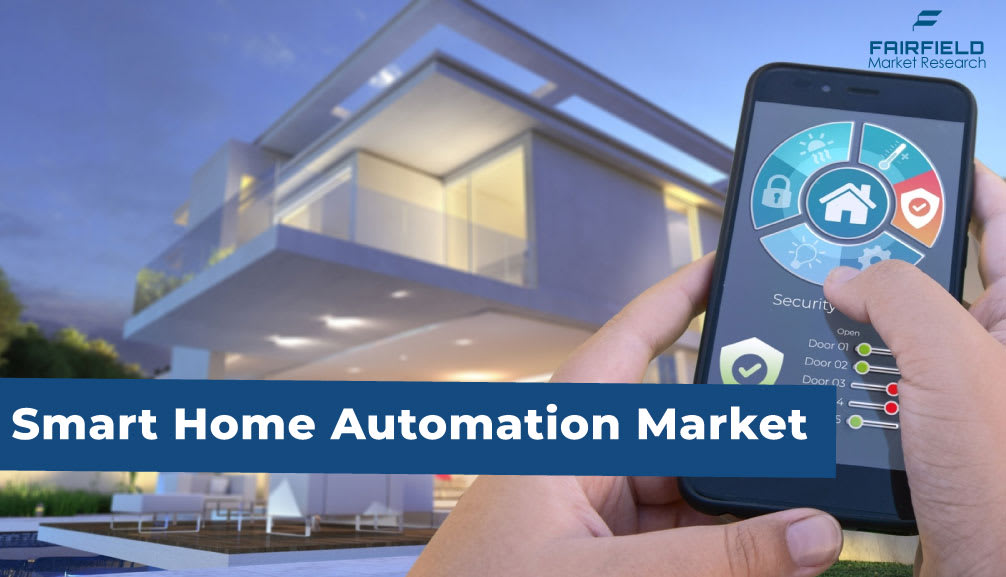
The global smart home automation market is rapidly evolving as consumers across the globe embrace the shift toward connected, energy-efficient, and secure living environments. Estimated at US$71.8 billion in 2025, the market is projected to reach US$188.7 billion by 2032, expanding at a CAGR of 14.8%. The surge in demand for integrated smart technologies—from lighting and HVAC systems to security and audio-visual solutions—signals a widespread transformation in how homes function and interact with occupants.
The Push Toward Energy Efficiency and Sustainability
A major catalyst for the growing demand in smart home automation is the rising consumer focus on energy efficiency and sustainability. With increasing electricity costs and growing environmental consciousness, homeowners are turning to LED-based smart lighting systems that offer cost savings and a greener lifestyle.
Equipped with features like motion sensors, dimming controls, and daylight harvesting, smart lighting not only enhances convenience but also delivers up to 75% energy savings. Industry leaders such as Lutron Electronics are setting new standards with voice-activated and app-controlled solutions, turning intelligent lighting into a cornerstone of modern smart homes.
Enhancing Safety with Wireless Smart Security
Alongside energy management, home security is experiencing a significant upgrade through wireless automation systems. Driven by urban safety concerns and the proliferation of smartphones, smart security solutions now offer real-time alerts, remote monitoring, and AI-enhanced surveillance capabilities.
These systems are especially beneficial in retrofit scenarios, where traditional wired installations would be costly and invasive. In fact, wireless systems are 20–30% cheaper than their wired counterparts, making them a preferred choice for many homeowners. Global technology players like Cisco, Bosch, and Schneider Electric are leading the deployment of scalable smart security infrastructure across residential environments.
Smarter HVAC for Climate Control and Compliance
The shift toward smart HVAC systems is another key driver of market expansion, particularly in regions like Europe and Asia Pacific, where energy regulations are tightening. More than 85% of buildings in the EU were built before 2000, and nearly 75% of them lack adequate energy efficiency. As governments mandate climate-ready upgrades, homeowners are turning to IoT-enabled thermostats and zoned climate controls.
Companies like Tado are responding with advanced smart thermostats that provide up to 19% energy savings using predictive analytics and mobile-based controls. The result is a dual benefit—improved comfort and compliance with zero-emission goals—positioning smart HVAC as a central pillar in the smart home ecosystem.
Smartphone Integration Fuels Asia Pacific Growth
In the Asia Pacific region, the expansion of smart home automation is being driven largely by smartphone penetration and rising disposable incomes. With over 70% of China’s population owning smartphones in 2022, and similar trends across India and Southeast Asia, mobile connectivity is enabling easy adoption of wireless lighting, HVAC, and security solutions.
Tech giants like Samsung and Xiaomi are delivering smartphone-linked automation hubs that empower middle-class households to control their home environments using intuitive mobile apps and voice commands. As smartphones continue to dominate as the preferred control interface, they are solidifying their role as the backbone of connected living in the region.
Smart Cities Unlock New Market Potential
Government-backed smart city projects across the Middle East and Asia Pacific are creating new opportunities for smart home automation providers. Urban infrastructure developments in countries like the UAE, India, and Saudi Arabia are integrating smart surveillance, energy systems, and home automation into public and private developments.
Public–private partnerships are facilitating these advancements, with companies like Siemens, Cisco, and Schneider Electric embedding smart technologies directly into new construction projects. As cities strive to become safer and more sustainable, home automation technologies are becoming critical enablers of smart urban living.
Regional Insights: Where Growth Is Happening
North America leads smart home adoption, with over 60 million homes using voice-controlled devices like Amazon Echo and Sonos for A/V, lighting, and appliance management.
Europe is focused on smart HVAC retrofits driven by energy regulations, while Asia Pacific sees rapid growth fueled by smartphone use and urbanization.
Competitive Landscape: Leading the Innovation Wave
A dynamic and competitive ecosystem is driving the evolution of the smart home automation market. Key players include:
• Amazon
• Apple Inc.
• Samsung Electronics
• Siemens AG
• Schneider Electric
• Bosch
• ABB Ltd.
• Honeywell International Inc.
• Xiaomi
• Control4 Corporation
• Philips Hue
• Lutron Electronics
These companies are at the forefront of innovation, investing in IoT, AI, voice control, and cloud-based platforms to enhance user experiences and expand the reach of connected living.
Get Sample Copy of Report at:
link


:max_bytes(150000):strip_icc()/GettyImages-1220602415-869d569919b24829b21868f530a8207f.jpg "The 1980s Trend Designers Hope Never Comes Back")