
Smart Home IoT Devices

 Smart home Internet of Things (IoT) devices have changed the way in which people interact with their homes, such as turning off lights with voice commands, and tracking energy consumption in real time. The home of the future — one that can “think” and “respond” — now has become common-place, thanks to the IoT.
According to Statista, the worldwide market for smart homes will grow to an estimated USD 231 billion by 2028, with India anticipated to be a leading segment in that growth. The shift has been enhanced by a number of factors including affordable IoT hardware, and improved Wi-Fi connectivity, but more importantly the consolidation via cloud and voice assistants has enhanced the purchase of devices and technology.
What Makes a Home “Smart”?
A smart home uses the Internet of Things (IoT)—a system of connected sensors, devices, and software—to perform tasks, collect data, and make things easier for the user. These devices communicate using a wireless protocol, such as Wi-Fi, Zigbee, Bluetooth Low Energy (BLE), and Z-Wave. Typically, they will be managed by apps or smart hubs.
The main components of a smart home include:
- Smart lighting (bulbs, switches, sensors)
- Smart plugs and appliances
- Smart thermostats and HVAC controllers
- Security systems and cameras
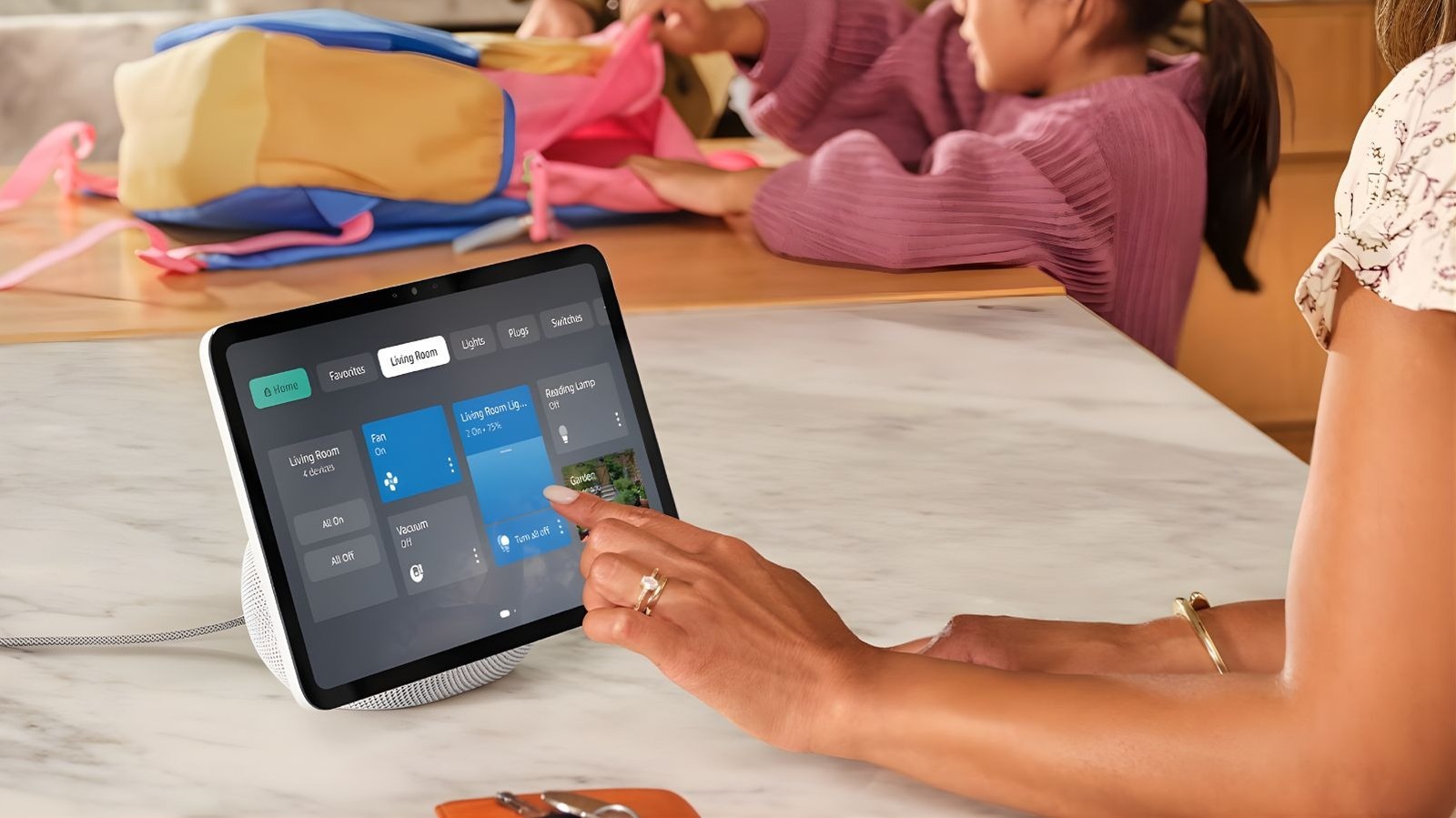
- Voice assistants and hubs
- Smart entertainment/media systems
Altogether, all of the smart devices work together to create a smart home that can adjust to a user’s life, preferences, and routines.
The Ecosystem of Smart Devices
- Smart Lighting: Beyond On and Off
Smart lighting systems—Philips Hue, Syska Smart LED, Wipro Smart Bulbs—allow users to set brightness, colors, and timings. Many of these lights can use motion detection sensors and automatic daylight detection to intelligently save energy. Using apps like Google Home or Amazon Alexa allows voice control of the smart lights and establishing scenes, such as dimming the lights as you start a movie or increasing brightness with your morning alarm.
- Smart Security: Peace of Mind in Real Time
Security represents one of the most significant drivers for the adoption of smart homes. Products such as video door bells (Ring, Qubo), CCTV cameras, smart locks (Yale, Godrej), and motion sensors enable homeowners to manage their security remotely. Many solutions can stream live footage, provide two way communication, and send alerts based on motion triggering enabled by AI. Facial recognition is now emerging as a new way to monitor activities at home, offering immediate notifications based on the identity of the visitor whether they are known or unknown.
- Smart Energy Management
Smart plugs and smart meters allow you to monitor and manage your electricity usage on a device-by-device basis. Using products such as the Kasa Smart Plug from TP-Link or Wiser Energy by Schneider Electric, you can track the performance of lights, appliances, and devices to become aware of where your energy is being wasted and reduce your bills. Some smart meters even monitor how much energy you are using and when, and will sync with your solar or battery storage system to get the best energy from the grid.
- Smart Appliances: Intelligence in Everyday Tasks
Appliances that are enabled with IoT — like refrigerators that notify you when groceries are running low, or washing machines that automatically choose the appropriate wash cycle — represent the next stage of home automation. Brands such as Samsung, LG, and Bosch are leading this sector by placing sensors, Wi-Fi modules, and cloud analytics into their devices.
- Climate and Comfort Control
Smart thermostats and smart air conditioners are changing the way the climate is controlled in the home environment. Devices such as Google Nest and Sensibo Sky will learn how you behave in your home and adjust the temperature settings automatically to provide comfort and manage energy efficiency. Smart heating and cooling systems can save you between 20-30% on energy costs – a significant benefit in a country like India where energy costs go up substantially in the summer months because conditions are hot. In summer months while managing the chill, users can expect savings while maintaining a comfortable cool environment.
Data Security and Privacy Concerns
Although smart homes provide convenience, they also have the potential to expose cybersecurity vulnerabilities, perhaps even physically! Every connected device to a smart home can be a point of access for a hacker. The fact that voice assistants and cameras have been hacked in the past indicates that better encryption, multi-factor authentication, and firmware updates are essential.
Governments and technology partnerships are addressing these concerns through initiatives like Matter (developed by a consortium called Connectivity Standards Alliance) and MeitY’s Digital India IoT security frameworks being developed in India. These initiatives will mandate compliance with privacy, interoperability, and energy efficiency standards.
The Indian Smart Home Landscape
India’s smart home industry is growing rapidly and supported by:
- Middle-class consumers increasingly adopting inexpensive smart devices
- Increased broadband and 5G connectivity
- Investment in home automation startups like Oakter, Zunpulse, and Cubical Labs
- Smart home integration with smart city projects under Digital India
Consumers can access smart home devices easily through e-commerce sites, and so-called “do-it-yourself” smart devices are enabling tech-savvy consumers to create their own customized systems. According to Counterpoint Research, India’s connected device market grew 22% year-on-year in 2024 with smart TVs, cameras, and plugs leading the way in sales.
Sustainability and Energy Efficiency
IoT systems for smart homes are not only about luxury; they serve a very important role in reducing energy consumption. Smart thermostats, for example, can achieve a 15% reduction in their heating/cooling energy usage, and linked lighting uses energy efficiently through the ability to turn lights on, off, and dim them. Most new gadgets are available with energy-saving modes and/or carbon footprint dashboards in mind that address the issue of sustainability which is becoming an emerging global concern and India’s target of Net-Zero is by 2070.
Smart water meters – they have a less extensive series of benefits – and appliances that monitor for leaks allow for monitoring of consumption in real time to help prevent leaks, a problem prevalent in India’s urban systems.
The Future: Connected, Intelligent, and Secure
As IoT chips shrink and become more power efficient, and our AI processing stays at the edge, the smart home continues to evolve, moving from a reactive to a predictive environment. Our devices will act proactively, anticipating needs — not only mood-based light changes, but also responding automatically to detect, monitor anomalies like gas leaks, or a malfunctioning appliance.
Also, the launch of Matter protocol is important progress towards fluent communication with ecosystems, including Apple, Google, Amazon, and Samsung, and, with the introduction of connecting capabilities to 5G, the flexibility of seamless real-time responsiveness will open doors to beautiful, AR-enabled touch dashboards that create immersive experiences in home control.
Conclusion
Smart home IoT devices signifies a trend in our home toward more intelligent living — where automation converges with sustainability, and convenience converges with security. We started with simple remote-controlled plugs, and now we have built a complete, integrated ecosystem that learns, adapts, and evolves.
In India, integrating IoT with AI, and with cheap hardware are creating opportunities for not just the consumer journey, but also for startups, developers, and manufacturers to innovate for the next billion users.
As the technology continues to go through maturation, the future home won’t just be ‘connected’, but will understand its environment, energy usage, and the humans inside of it.
 Follow the Bisinfotech WhatsApp channel to stay updated on India’s new technology ecosystem
link

:max_bytes(150000):strip_icc()/GettyImages-1220602415-869d569919b24829b21868f530a8207f.jpg "The 1980s Trend Designers Hope Never Comes Back")