
Specs, Style, And Performance Breakdown
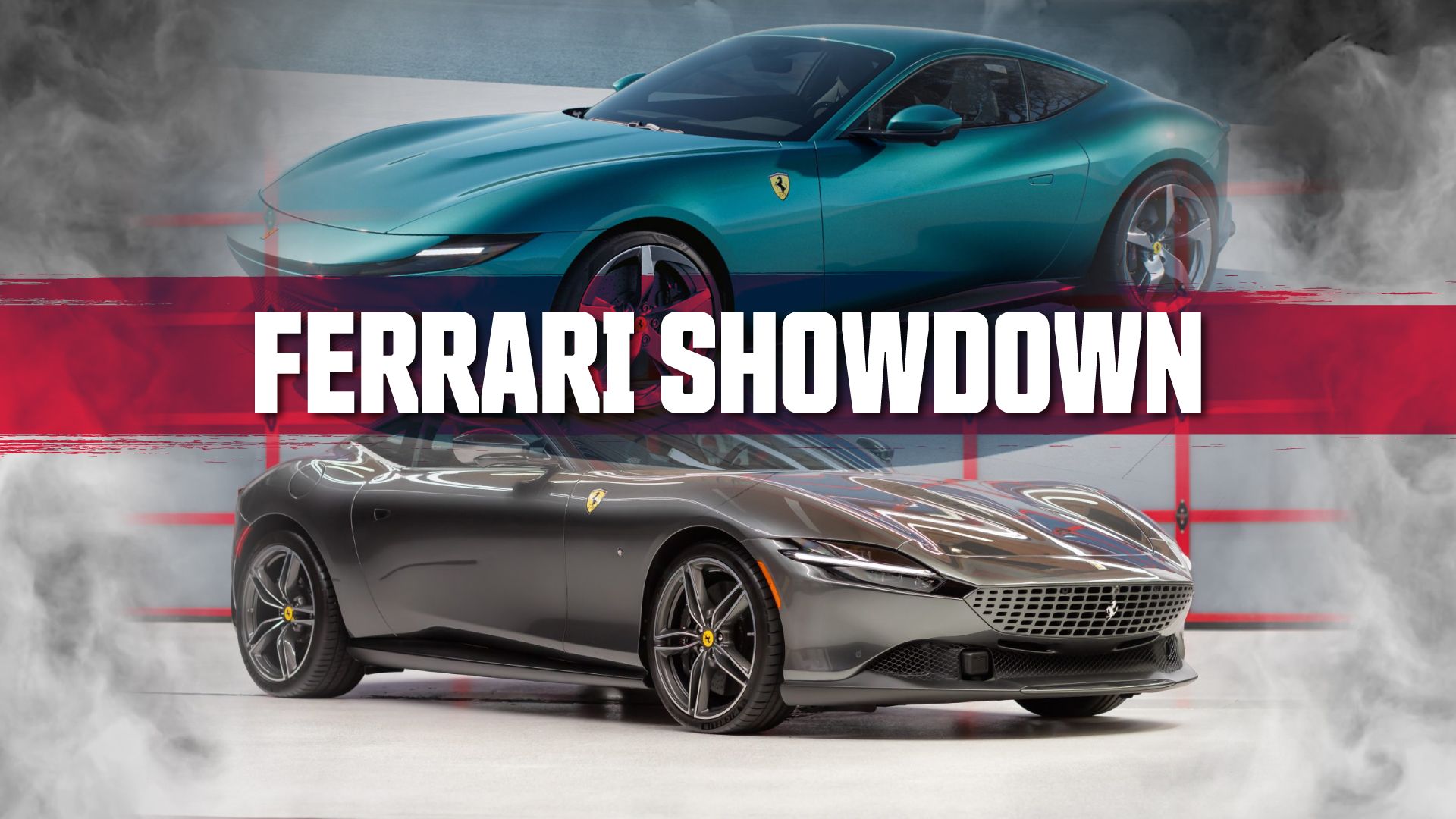
Ferrari last week revealed the Amalfi as the successor to the Roma, adding to the entry point of its lineup a new sultry coupe with V8 power and an evocative name that conjures up summers of eating pasta, drinking aperitivi, and taking in the rich culture and heritage of Italy. Although billed as a new design, the Amalfi is more of a major mid-cycle refresh for the Roma – or “Modificato,” as Ferrari calls it – than a true redesign. As such, the two cars share many similarities. There are some key differences, though.

If you are considering purchasing an Amalfi, bear in mind that ordering a new Ferrari can result in a wait time measured in years, not weeks or months, meaning a Roma may be the better option if you’re the type who needs instant gratification. Here’s a quick comparison to help you decide whether the Amalfi is worth the wait – or whether you should run out and pick up a Roma that’s already landed.
Exterior Design: Big Shoes To Fill
Design is always a subjective matter, especially when evaluating purely stylistic elements and ignoring function. That said, the Ferrari Roma has been almost universally praised since its reveal in 2019. Its design stands out for its elegance, which recalls classic Ferraris of the 1960s – like the 250 GT Lusso and 250 GT California Spyder – without feeling retro. A combination of unfussy surfacing, along with the lack of large air intakes and protruding aerodynamic features, helps it stand apart from some of Ferrari’s more performance-focused models.
One area that draws mixed reactions is the eggcrate-style grille, which is finished in body color. The taillights are also not to everyone’s taste, especially among brand traditionalists. Instead of the familiar round lights many associate with Ferrari, the Roma uses slim, horizontal units. However, the design reflects Ferrari’s current direction, which has moved away from circular rear lights in recent models.
With the Amalfi, Ferrari aimed to add sportier character to the Roma’s look while keeping its elegance intact. One key change is the way the front intakes have been revised to create an even cleaner appearance. Rather than placing them prominently, some have been integrated into the headlight cutouts, while the lower grille is blacked out to make it appear smaller. A narrow blacked-out slot runs across the nose, similar to the treatment seen on the Purosangue SUV.
The greenhouse remains largely the same, but the body has been revised with a new character line that adds more definition and gives the car a slightly more muscular stance. At the rear, the Amalfi takes on a more technical appearance. It features a larger, more extended diffuser and a new rear wing that spans the full width of the car, with an active element in the center.
Interior Design: Keeping What Works
Mirroring the exterior, Ferrari has pared back some of the complexity of the Roma’s interior for a more streamlined and functional design in the Amalfi. While the overall layout remains familiar, the changes reflect both customer feedback and technological refinement. The dashboard continues to feature a dual-cowl design, divided by a central 10.3-inch touchscreen. However, the screen has been switched from a portrait format in the Roma to a landscape layout in the Amalfi. It is also mounted lower thanks to a new flatter center console. According to Ferrari, the new layout improves reach and visibility.
The front passenger still gets their own 8.8-inch display, which shows performance data such as g-forces and engine speed, along with multimedia information. And yes, there are still two rear seats, but they continue to be largely useless for anyone larger than a small child.
One of the most noticeable updates is the new steering wheel, which marks a return to more tactile controls after criticism of the Roma’s heavily touch-based interface. The Amalfi now features a physical aluminum engine start button, replacing the flat haptic-style one in the Roma. The wheel also includes improved ergonomics: the left spoke houses controls for driver-assist systems, while the right has settings (for the 15.6-inch digital gauge cluster), as well as controls for the indicators and wipers. On the back, two rotary dials allow for volume and station control.
Connectivity and tech features continue to evolve. Apple CarPlay, Android Auto, and wireless phone charging remain, and the Amalfi now adds the MyFerrari Connect system for remote vehicle monitoring via smartphone. This system is available on the Roma Spider, which is still on sale, but not the coupe. Ferrari hasn’t announced plans for an Amalfi Spider, but one is likely coming to replace the Roma Spider at some point.
Performance: It’s Not Only About The Engine
|
|
Ferrari Amalfi |
Ferrari Roma |
|---|---|---|
|
Engine |
Twin-Turbocharged 3.9-liter V8 |
|
|
Drivetrain |
Front Mid-Engine/Rear-Wheel Drive |
|
|
Transmission |
8-Speed Dual-Clutch Automatic |
|
|
Horsepower |
631 hp |
611 hp |
|
Torque |
561 lb-ft |
|
|
0-60 |
3.3 seconds |
3.4 seconds |
|
Top Speed |
199 mph |
|
|
Convertible Option |
Planned |
Yes |
|
Dry Weight |
3,241 pounds |
3,245 pounds |
|
Price |
N/A |
$243,358 |
Ferrari will tell you the Roma is all about grand touring, but the “entry-level” sports car still delivers performance in spades. So much so that you might question whether upgrading to one of Ferrari’s mid-engine supercars is worth the trade-off in comfort and practicality. With the Amalfi, Ferrari’s engineers focused on making that performance even more accessible – refining the driving experience while preserving everyday usability.
The Amalfi retains the Roma’s flat-plane V8, but with a modest power bump courtesy of refinements to the twin-turbocharging system, not that the Roma needed any more power as the car can easily light up the tires. The Amalfi also benefits from sharper throttle response and slightly improved acceleration compared to its predecessor. Peak torque remains unchanged, but a flatter torque curve gives the car stronger pulling power at mid and high RPMs. The eight-speed dual-clutch transmission carries over, too, though it’s been revised for smoother and quicker shifts, further enhancing driveability.

Related
The Man Who Saved Ferrari Is Ready To Bail Out McLaren
Two big names in automotive luxury have joined McLaren’s board, including the one who saved Ferrari.
Elsewhere, Ferrari borrowed some tech from its more track-focused models. The Amalfi gets a brake-by-wire system similar to that used in the SF90 Stradale and 296 GTB, allowing for better brake modulation and reduced pedal travel. An advanced ABS system, also inherited from the 296, helps maintain braking performance across all drive modes. Ferrari says this results in shorter stopping distances and better consistency, even in varying grip conditions.
The steering has also been fine-tuned to be more responsive compared to the Roma, particularly on low-grip surfaces. Aerodynamic upgrades include a larger rear diffuser and a new active rear spoiler. Small front diffusers help balance front-end downforce and direct air to the brake rotors, while underbody fairings reduce drag and improve high-speed stability.
Conclusion: There’s No Wrong Choice
The Roma is now five years old, but its design still looks fresh – so much so that its successor, the Amalfi, appears almost identical at first glance. If we had to choose between them on looks alone, the Amalfi just edges ahead thanks to its slightly more muscular stance and more technical detailing at the rear. Still, the styling differences are subtle. The performance gap is also small, but again, the Amalfi takes the lead with refinements that help the driver extract more from the car.
This then brings us to price. Despite the myth that all Ferraris appreciate in value, the Roma is one of the rare models where used prices currently fall well below MSRP. Even with Ferrari’s limited production approach and famously long wait times, well-maintained used Romas with less than 10,000 miles have sold for under $180,000 on major auction sites. That’s less than the price of a mid-range Porsche 911 in today’s market, which is impressive when you consider the Roma’s original price starts north of $240,000, not including the pricey optional extras that are often included. Combine that with Ferrari’s solid warranty and maintenance coverage, and a pre-owned Roma becomes a compelling alternative to a factory-fresh Amalfi.

Related
Ferrari Roma Spider Debuts With Soft Top And 612 HP
Is this the prettiest new Ferrari money can buy?
In the end, there’s no wrong choice. If you’re on a tighter budget, the Roma is a smart buy. But if money is less of a concern, the Amalfi offers a slightly more refined and rounded experience that subtly builds on everything the Roma already does well.
Sources: Ferrari
link

:max_bytes(150000):strip_icc()/GettyImages-2231794418-eacb09f8eabc44d3927d178b426ac298.jpg "How to Color Drench Your Home’s Exterior")
:max_bytes(150000):strip_icc()/GettyImages-1220602415-869d569919b24829b21868f530a8207f.jpg "The 1980s Trend Designers Hope Never Comes Back")
