
6 Best Indoor Air Quality Monitors of 2024
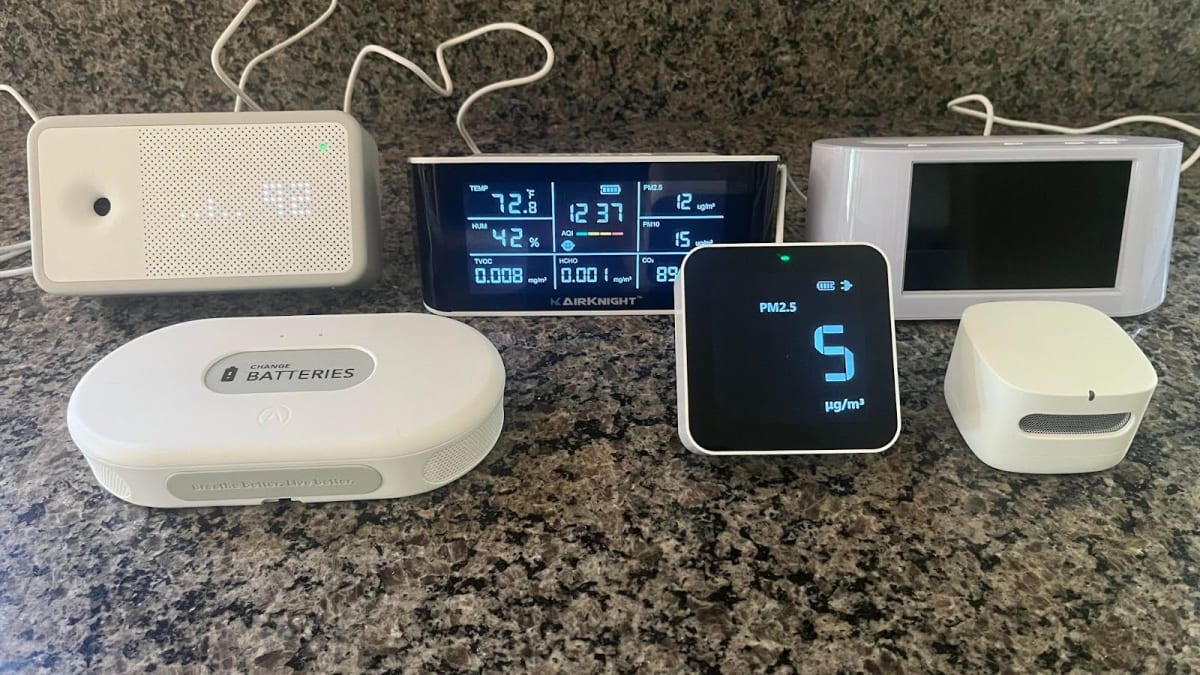

How often do you think about your indoor air quality? Cooking, cleaning, and wood-burning stoves are just a few everyday activities that can impact the level of pollutants in your indoor air. If you’re concerned about the air quality in your home or are just curious about how your air stacks up against recommended norms, an indoor air quality monitor can help you identify any areas of concern.
Most air quality monitors will test for particulate matter and volatile organic compounds, but many offer even more comprehensive coverage. VOCs include airborne pollutants such as kitchen gasses, fumes, and cleaning products. We tested the best indoor air quality monitors, considering factors like user experience, value, and pollutant coverage options. Our testing found that the Airthings View Plus
(available at Amazon for $299.00)
is the best indoor air quality monitor. It offers coverage of an impressive seven household air quality elements. Plus, it features Bluetooth and connects to multiple smart home platforms.
For something more affordable, check out the Awair Element (available at Amazon). In addition to this top pick, we found several other air quality monitors offering impressive features at varying price points.
Other Indoor Air Quality Monitors We Tested
How We Tested The Best Indoor Air Quality Monitors

Credit:
Reviewed / Emily Midgley
While testing our indoor air quality monitors we paid close attention to user experience, connectivity, performance and more.
When testing indoor air quality monitors we looked at multiple variables, including how many types of sensors are included, the overall user experience, and the connectivity/compatibility with Wi-Fi and smart home technology. Each model is scored numerically and then ranked to determine which options you should consider.
Each unit was set up on the kitchen counter. We chose the kitchen as it is a highly frequented space equipped with a gas stove. We monitored the readings of each unit when the burners and oven were in use to see how the measurements of each key factor changed.
What You Should Know About Indoor Air Quality Monitors
Are indoor air quality monitors worth it?

Credit:
Reviewed / Emily Midgley
An indoor air quality monitor allows you to quickly see when certain key air quality elements drop below normal.
Yes, they can alert you when certain elements in your air become unhealthy so you can quickly take action to improve it.
If anyone in your home has environmental allergies, there is poor ventilation, or you often run a wood-burning stove, we recommend getting an indoor air quality monitor.
For the most part, our indoor air quality remained good during our weeks of testing. However, there were several times when the carbon dioxide levels dipped into the fair category and we received tips to open a window to let fresh air in. We also received alerts that the particulate matter increased significantly and we should turn on an air purifier.
Amazon’s Smart Air Quality monitor takes its integration even further and can alert your air purifier to turn on when conditions become poor. That kind of seamless integration makes life easier and is one less thing to have to worry about.
What are indoor air quality monitor sensors and why do they matter?
Indoor air quality monitors check for different pollutants and environmental factors inside of your home to see how clean the air is. The sensors check for certain factors that can impact air quality, giving you useful information to keep the indoor environment healthy.
Indoor air quality monitors have a range of sensors, but these are the most common types you’ll find:
- Particulate matter
- Carbon dioxide
- Volatile organic compounds
- Carbon monoxide
- Humidity
- Temperature
- Formaldehyde
- Ozone
- Nitrogen dioxide
- Radon
These sensors play a key role in understanding the air you breathe and spotting potential health risks. By monitoring these factors, you can make smart choices to improve ventilation, reduce harmful substances, and keep your indoor air healthier.
What is the best way to monitor indoor air quality?
The best way to monitor indoor air quality is to use an indoor air quality monitor. A good air quality monitor will measure key pollutants like particulate matter, VOCs, carbon dioxide, and humidity levels in real time. You can easily find monitors that sync with your smartphone, allowing you to track your indoor air quality trends and receive alerts if anything goes out of the safe range. Alongside using a monitor, you should regularly change your air filters, ventilate your space, and reduce sources of indoor pollution, like using certain cleaning products or tobacco smoke. With an indoor air quality monitor, you have a clear picture of your indoor environment, which can help you take action before issues arise.
What are the symptoms of bad air quality in the home?
Common signs to watch out for include frequent headaches, dizziness, or more tiredness than usual. You might notice that you or others in the house are coughing more often, have irritated eyes, nose, or throat, or are struggling with allergies or asthma symptoms. Poor indoor air quality can also cause musty odors or make the air feel stale and stuffy. If you or your family are experiencing these symptoms, especially when spending a lot of time indoors, it’s worth checking your home’s air quality to see if something’s wrong.
What is AQI?
AQI, or Air Quality Index, is a standardized system that measures and shares data about how clean or polluted the outdoor air is on any given day. The United States Environmental Protection Agency created the AQI in 1976. It’s a simple scale from 0 to 500, where lower numbers indicate better air quality and higher numbers mean the air is more polluted and potentially harmful to your health. The AQI focuses on major pollutants like ozone, particulate matter, carbon monoxide, sulfur dioxide, and nitrogen dioxide. Each pollutant is given a score, and the overall AQI is based on the highest scores. So, when you see an AQI number, it’s a quick way to understand whether it’s a good day to be outside or limit your exposure.
More Articles You Might Enjoy
link


:max_bytes(150000):strip_icc()/GettyImages-1220602415-869d569919b24829b21868f530a8207f.jpg "The 1980s Trend Designers Hope Never Comes Back")